












Expanding Overseas: Why You Need a Local Partner When Moving to a New Country

Feb 09, 2026
Expanding Overseas: Why You Need a Local Partner When Moving to a New Country

Expanding into a new country is a defining step for any organisation. It reflects ambition, long-term planning, and confidence in future growth. However, Global Business Expansion involves far more than securing a presence in a new market. Regulatory complexity, cultural differences, and operational unfamiliarity can quickly create barriers if they are not managed carefully.

This is why engaging a Local Business Partner is a strategic advantage rather than a convenience.

Managing Regulatory and Administrative Complexity

Every jurisdiction has its own legal, tax, and employment frameworks. Company incorporation, statutory reporting, and compliance obligations vary widely and often change without notice. A trusted local partner understands these requirements and ensures that essential processes are handled correctly from the outset.

This support reduces risk and allows leadership teams to focus on strategic priorities rather than navigating unfamiliar administrative systems.

Cultural Insight and Market Understanding

Successful expansion depends not only on regulatory compliance, but also on cultural alignment. Business customs, communication styles, and expectations differ across regions, particularly in Asia-Pacific markets. A local partner provides insight into these nuances, helping businesses engage more effectively with clients, suppliers, and stakeholders.

This local understanding builds credibility and trust—both critical when establishing long-term operations in a new country.

Establishing a Professional Local Presence

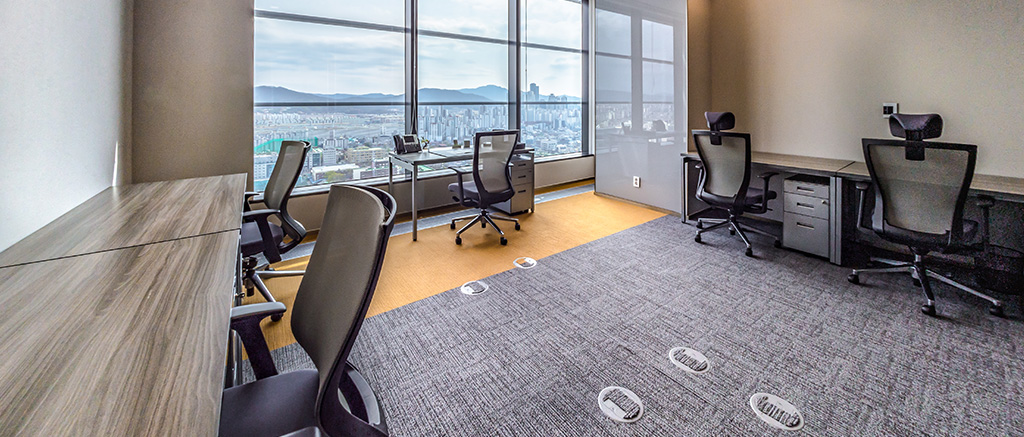
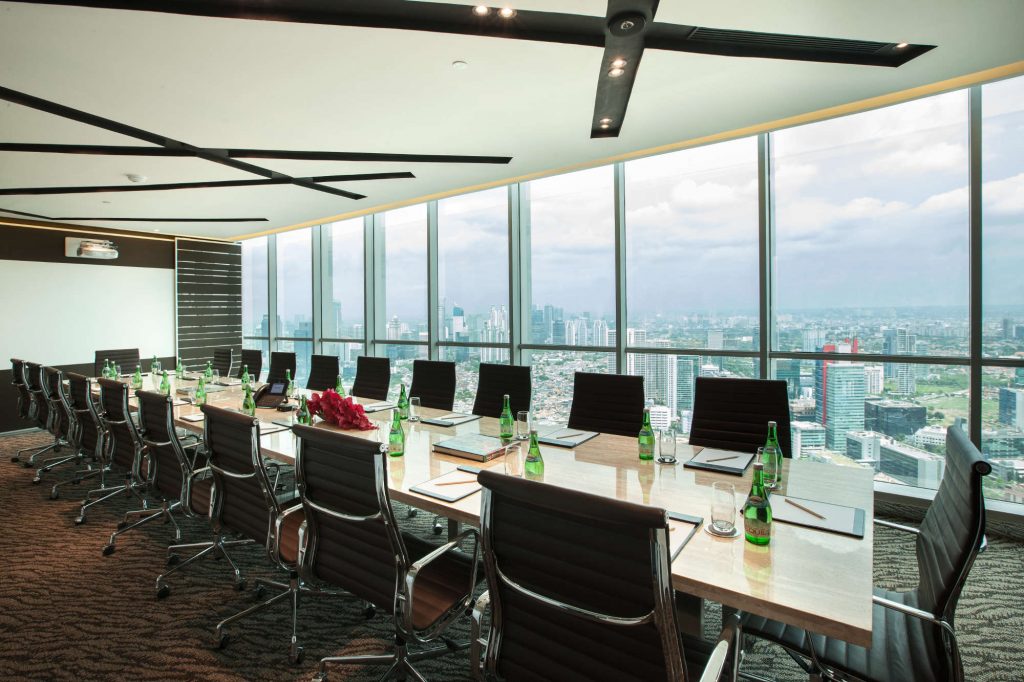
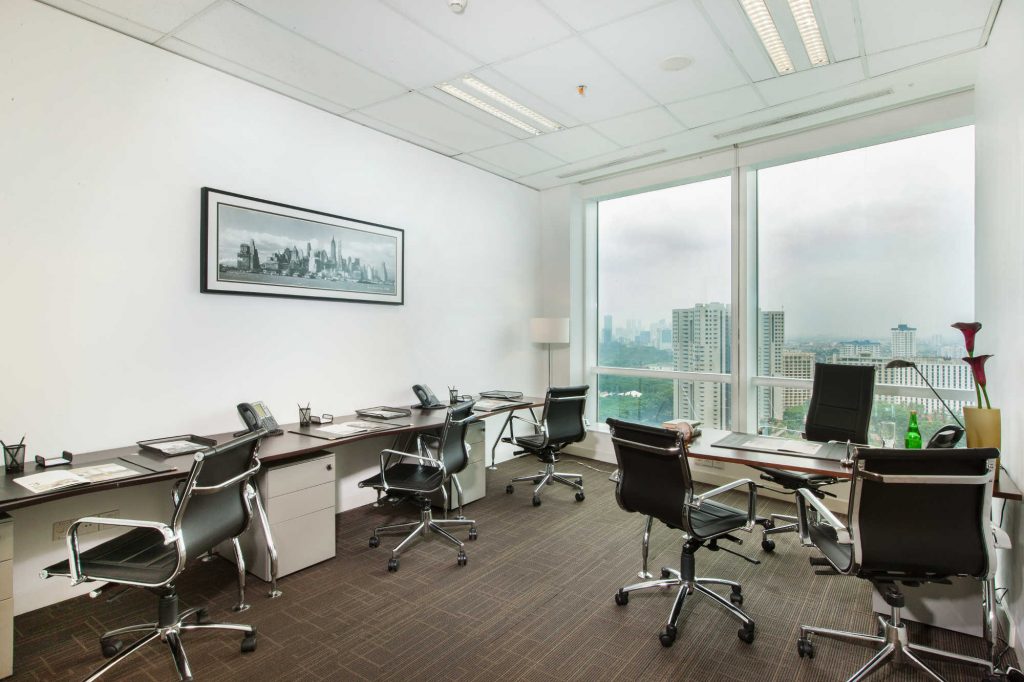
Credibility matters when entering a new market. A professionally managed serviced office allows businesses to operate from a fully supported workspace without the commitment of a traditional lease. It provides immediate functionality while maintaining flexibility as the business grows.

For companies exploring a market or operating with distributed teams, a virtual office offers a compliant business address and essential administrative support. This approach enables a local footprint while keeping overheads controlled.

Supporting Sustainable Growth

International expansion is rarely linear. Market conditions evolve, teams scale, and operational needs change over time. A local partner provides adaptable infrastructure and on-the-ground support that evolves alongside the business. This flexibility is essential for managing uncertainty while maintaining momentum.

A Strategic Foundation for Long-Term Success

Moving into a new country is not simply an operational decision—it is a strategic one. The right local partner provides stability, insight, and professional infrastructure that supports confident decision-making and long-term growth.

When global ambition is paired with local expertise, businesses are better positioned to operate efficiently, protect their reputation, and succeed in competitive international markets.

 

Frequently Asked Questions

Why is a local partner important when expanding into a new country?
A local partner provides essential insight into regulatory requirements, business practices, and cultural expectations. This reduces operational risk and allows companies to enter new markets with greater confidence and efficiency.
How does a local partner support Global Business Expansion?
During Global Business Expansion a local partner helps businesses navigate compliance, establish operations faster, and adapt to changing market conditions. Their on-the-ground knowledge supports informed decision-making and long-term sustainability.
What role does office infrastructure play in overseas expansion?
Professional infrastructure helps establish credibility in a new market. Solutions such as a serviced office allow businesses to operate immediately with minimal setup, while maintaining flexibility as operations scale.
Can a virtual office support market entry without a physical presence?
Yes. A virtual office provides a compliant business address and administrative support, making it suitable for companies testing a market or operating with remote teams before committing to a physical workspace.

Which Workspace Model Fits Your Business: Serviced Office or Co-working?

Feb 05, 2026
Which Workspace Model Fits Your Business: Serviced Office or Co-working?

If your team could design your ideal workspace, what would it look like?

Would it be a traditional office designed for deep focus, or an open space that encourages interaction? No matter its layout, your workspace is not just a location. It’s where your team collaborates, ideas are executed, and your company identity grows. Choosing one is like looking for a business partner, it has to align with your vision.

Picking the wrong office can slow down productivity, while the right one can elevate performance, morale, and brand image. For modern companies, two flexible options have emerged as popular alternatives to traditional offices: serviced offices and co-working spaces. They offer distinct advantages for different work styles.

To know which one works best for you and your team, read this article before signing your next lease.


serviced office workspace


What is a Serviced Office?

A serviced office is a fully-furnished private office space designed to let you focus entirely on your business. You don’t need to worry about buying furniture, setting up internet connections, or hiring cleaning staff. The provider handles all of that.

Everything is already in place. All you have to do is show up and start working!

This workspace model is popular among growing startups, small to mid-sized companies, and businesses expanding into new locations. They’re particularly useful for businesses that value privacy, stability, and a corporate atmosphere without the commitment of long-term leases. Here are its pros and cons:

Pros of Serviced Offices

  • Everything is included, from furniture to facilities, which saves both time and setup costs.
  • The office gives a professional impression that can enhance your brand and credibility.
  • The environment offers privacy and security, ideal for focused work or confidential discussions.
  • Maintenance, cleaning, and utilities are managed by the provider, so operations are stress-free.

Cons of Serviced Offices

  • Higher monthly cost compared to a co-working membership, which can be a consideration for very small budgets.
  • Less ability to customize the office layout and branding compared to a traditional lease.
  • Limited social interaction compared to co-working communities.

In short, a serviced office has the structure and polish of a corporate workspace with the flexibility of modern business management.


coworking workspace


What is Coworking?

Coworking is the concept of working in a shared environment where individuals and teams from different companies share space and resources, instead of isolated cubicles. It invites community and productivity.

As a workspace model, co-working provides a ready-to-use office solution without the long-term commitment. Members can choose from flexible arrangements like coworking spaces or dedicated stations. Amenities such as Wi-Fi, printing, reception services, communal lounges, and meeting rooms are typically included.

Coworking spaces cater to freelancers, entrepreneurs, digital nomads, small business owners, and even established companies experimenting with hybrid work setups. They allow people to enjoy the professionalism of an office while staying cost-efficient and socially connected. The following are its pros and cons:

Pros of Coworking

  • Flexible membership options offering daily, weekly, monthly, and on-demand access.
  • Costs are affordable since amenities and utilities are shared among members.
  • Exposure to a network of diverse professionals and potential collaborators.
  • The community aspect often sparks creativity and new opportunities.

Cons of Coworking

  • Privacy can be limited in open layouts.
  • Availability during peak hours can sometimes be limited.
  • Noise and movement may be distracting.

With its mix of practicality and collaboration, co-working transforms work from a routine into a community experience.


Which Workspace Model Fits Your Business?

The modern workplace is all about balance: flexibility, comfort, and productivity. But which workspace model gives you that?

FACTOR  SERVICED OFFICE COWORKING SPACE
Privacy Fully-furnished private office Ready-to-use shared workspace
Flexibility Monthly / Yearly Daily / Weekly / Monthly
Cost Efficiency Higher investment with exclusive use Shared costs make it affordable
Environment / Work Style Best for focus and confidentiality Best for collaboration and creativity


Neither is universally “better,” they simply serve different working styles and company cultures. The question isn’t which model is superior, but which one helps your team do their best work every single day.

To make the right choice, start by identifying your business priorities. 

  • How much flexibility do you need?
  • How important is privacy in your day-to-day operations?
  • What kind of atmosphere keeps your team motivated?

Observe your team’s habits. How do they focus, communicate, and collaborate? Because your workspace should amplify those strengths. Consider your future, too. In your estimated trajectory, will operations go fast? Or do you have to prepare for a pivot? When you choose with those things in mind, the right workspace model becomes clear.

Ideally, a workspace provider should offer the flexibility to choose what’s right for you now, and what might be right for you in the future. At CEO SUITE, you’ll find both under one roof. We understand that no two businesses work the same way, so we offer tailored private serviced suites and inspiring co-working hubs that evolve with your needs. We combine elegant design, seamless service, and flexible terms to ensure your workspace always aligns with your ambitions. You may compare plans here.


Conclusion

Your workspace says more about your business than any brochure ever could. It grows, shifts, and reshapes itself around your people. Maybe right now, you crave the focus of a serviced office. Next year, the spark of a co-working setup.

Whatever you choose, find an office provider that becomes a partner in achieving your goals.

Korean SMEs and Hansang: Let’s Build a ‘Global Trade School’

Sep 27, 2016

◆ 15th World Korean Business Convention / The Ambitions of Three New Leading CEOs ◆

This year’s World Korean Business Convention has gained new energy as new members join the ‘Leading CEO’ group, which has played a central role in the Hansang (overseas Korean business) network. They are Ha Yong-hwa (60, Solomon Insurance Group), Shin Yi-jeong (55, Sushi Bay) and Kim Eun-mi (54, CEO SUITE). Leading CEOs are Hansang business owners with capital of at least US$3 million and annual sales of at least US$30 million. They are recommended by existing Leading CEOs and confirmed at the convention’s internal meetings, held twice a year. Around 40 members are currently active, and the three new Leading CEOs were selected in April. All three said they feel the weight of the responsibility that comes with the role. Meeting on the 27th at the Jeju International Convention Center, where the convention was held, the three new Leading CEOs agreed: “We will act as a bridge that introduces Korea to the world.”

◆ Expanded to 9 cities worldwide — Kim Eun-mi, CEO SUITE Founder

“I want to pass on the energy of young leaders to our senior Leading CEOs.”

Kim Eun-mi said, “It is an honour to join the Leading CEOs after serving as a ‘big sister’ in YBLN, the network of young Hansang. I will work hard to be a channel of communication between the generations.”

Kim said she will focus on raising the profile of Hansang. “When I took a taxi to the venue this time, the driver didn’t know what ‘Hansang’ meant,” she said. “I hope Hansang will gain the same global standing as the overseas Chinese merchants.” She added, “Hansang can be a very important platform for Korean companies expanding overseas. If the country made active use of Hansang, it could contribute to the national economy, and it’s a pity that this isn’t happening.”

She said her business has flourished thanks to the network the convention has given her, and that she has felt ‘Hansang power’ first-hand. Running an office rental business, she said, “Thanks to the advice and recommendations of colleagues I met at the convention, I was able to open in the Lotte Building in Hanoi, Vietnam, four months ago. Business went so smoothly; Hansang was a great help,” adding, “I hope many more Hansang will find business opportunities at this convention.”

CEO SUITE, which she runs, was founded in 1997 and now operates 19 centres in nine cities worldwide, including Jakarta and Singapore. “Just as I built my business by pioneering around the world, I will use my drive and networking power to serve as a business hub connecting Hansang with regional experts and diplomats,” she said.

◆ Succeeded with an insurance company in the US — Ha Yong-hwa, CEO of Solomon Insurance Group

“I want to introduce Korea to opinion leaders overseas.”

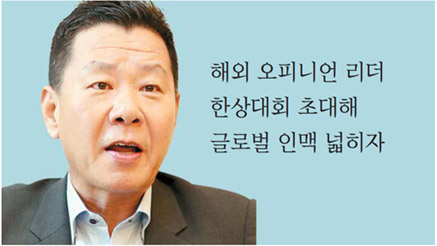
Asked about his ambitions as a Leading CEO, Ha Yong-hwa first mentioned the JCRC, a coalition of Jewish organisations. “Six years ago in Israel I saw the JCRC’s work. They invite opinion leaders from around the world to introduce Israel,” he said. “Our Hansang convention should play that kind of role.”

“Hansang have rich global business experience and networks,” Ha said. “If Hansang in each country brought just one overseas opinion leader to Korea, it would amount to enormous diplomatic power.”

He proposed creating a ‘Trade School’ (working title). “Connecting Korean SMEs that are keen to expand overseas with Hansang would create synergy,” he said firmly. “I would like to propose an education programme in which Hansang teach them the realities of overseas business and help them localise.”

Ha entered the insurance industry in 1992 as an insurance agent in the United States. Through diligence and persistent salesmanship, he founded an insurance company and built it into a solid business with annual premiums of US$57 million.

He said he wants to pass this experience on to young people, which is why he hires around 10 people from Korea every year. “Korean students have ambition and drive, but they often lack persistence,” Ha said. “There is no such thing as a jackpot in this world. You have to see change as an opportunity and prepare steadily.”


◆ Runs a 23-outlet chain in Australia — Shin Yi-jeong, CEO of Sushi Bay

“The business experience and knowledge of Hansang can greatly nourish future generations. I want to be a reliable mentor to young people.”

Shin Yi-jeong said, “When I was offered the Leading CEO role, I thought it would let me contribute to society. I will work for scholarships and job creation.”

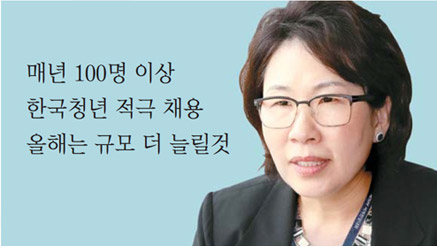
Ahead of the convention, she met representatives of Korean universities to discuss internship programmes. “We offer jobs at Sushi Bay to young people who want to work in Australia, and we also help them settle into local life,” Shin said. “We hire more than 100 young Koreans every year, and I want to increase that number.”

Shin stressed that hiring young people has a big diplomatic effect. “Young people are active on social networking services (SNS). Everything young people living overseas post on social media helps promote Korea,” she said. “When Hansang hire young Koreans, it raises the national brand.”

It pains her to see young people who cannot cope with life abroad and give up. “I also went to Australia as an international student, so I really understand what young people go through,” Shin said, advising, “To get an opportunity, you have to persevere.”

Sushi Bay, the conveyor-belt sushi chain she runs, has 23 outlets across Australia. It has grown by opening inside local department stores and similar venues. “We are a Korean company, but most of our customers are locals. We plan to expand into a global business,” Shin said.

[Special Reporting Team = Wi Jeong-hwan, Head of Industry Desk (Team Leader) / Reporters Nam Ki-hyun, Jeong Wook, Son Il-seon, Choi Seung-gyun, Kim Je-gwan, Lee Seon-hee, Jeon Gyeong-un, Yeon Gyu-wook, Park Chang-young / Photos = Reporters Lee Chung-woo, Kim Ho-young]
[© Maeil Business Newspaper & mk.co.kr. No unauthorised reproduction or redistribution]


Original article – http://news.mk.co.kr/newsRead.php?no=678309&year=2016

CEO SUITE Founder Kim Eun-mi: “Business Is About Winning Hearts… Build Your ‘Mental Muscle’”

Sep 23, 2016

Opens Korea Branch No. 2​ — Kim Eun-mi, CEO SUITE Founder

Built a global office services company from scratch

19 years, 9​ cities, 19 centres opened

Woman·Korean: overcoming double discrimination

‘Sincerity’ earned trust and success

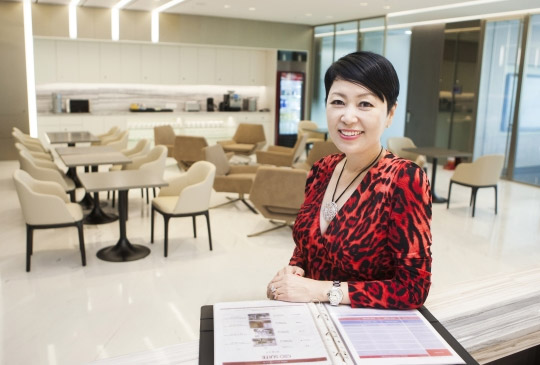
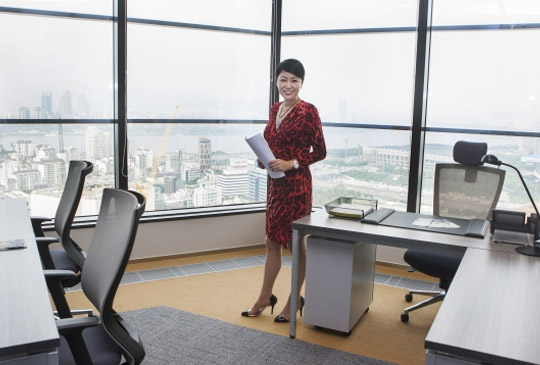
▲ Kim Eun-mi, CEO of CEO SUITE, stands in the lobby of the company’s second Korean centre at Parnas Tower in Gangnam-gu, Seoul. She has turned “Korean” and “woman”, two words once seen as handicaps, into keywords of success. © Lee Jeong-sil, photojournalist

Kim Eun-mi (pictured), who leads the global office services company CEO SUITE, opened the company’s second Korean centre at Parnas Tower in Gangnam-gu, Seoul, on the 1st. CEO SUITE rents out offices along with meeting rooms, equipment and secretarial staff. The centre is the company’s 19th location, opening five years after its first Korean centre at Kyobo Tower in Gwanghwamun, Seoul, and 19 years after the company was founded. “I am delighted to have opened our second Korean centre in the location we wanted after intense competition,” Kim said. She secured the Parnas Tower site only after a competitive bid against a British operator with 2,000 locations. It reminded her of the days, five years ago, when she was running around trying to open her first centre in Korea.

“Back then, people said, ‘If Mee Kim survives in Korea, I’ll eat my hat.’ Many asked how a small business run by a woman could succeed in a tough economy. Five years on, that view hasn’t changed. How could a small company, with a woman at the helm and no connections, beat the big corporations? That attitude is especially strong in Korea.”

Kim belongs to the first generation of the industry, with 28 years in office services. After graduating in social welfare from Yonsei University (class of ’81), she joined Citibank, but grew disillusioned with the listless life of a salaried worker and boarded a plane to Australia alone. She was 25. Juggling study and part-time work, she took her first step into the office services field when she joined a company called ‘Service Office’.

▲ CEO SUITE’s Parnas centre, directly connected to Samseong Station, boasts sweeping views of the Han River. © Lee Jeong-sil, photojournalist

Over seven years she proved herself as manager of six centres across Asia, but few positions were open to a woman and an Asian. She hit a solid glass ceiling, yet instead of giving up she founded her own company, CEO SUITE. In the 19 years since, Kim has grown CEO SUITE into a mid-sized company with 19 centres and around 1,000 offices in nine cities across eight Asian countries, including ‘megacities’ of more than 10 million people such as Jakarta in Indonesia, Shanghai in China and Bangkok in Thailand.

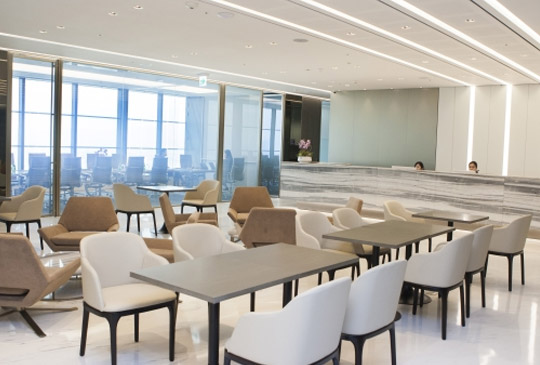
The new Parnas Tower centre covers 2,133 square metres (344 pyeong of exclusive floor area) and has 60 fully furnished offices of various sizes. Step out of the lift on the 29th floor and you first reach a relaxed lobby lounge. Once all client companies have moved in, it will host a range of networking events.

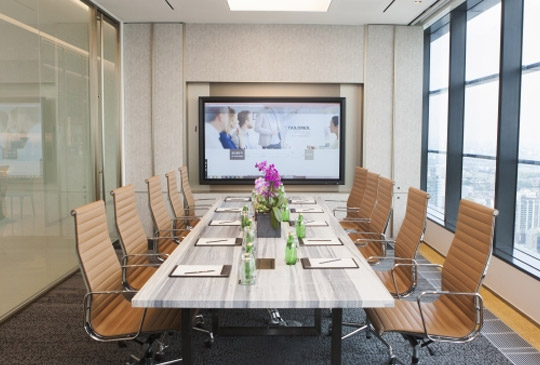
▲ A meeting room that seats up to 25 © Lee Jeong-sil, photojournalist

Next to the lounge is a meeting room for up to 25 people, with a view over the Han River from its windows. The 60 offices come in a variety of sizes, including co-working offices for start-ups. “Clients can rent an office of the size they prefer for as long as they want,” Kim explained. Offices can also be used by the hour, and frequent business travellers can take a membership that gives free access to all 19 centres. Beyond office rental, clients can also get professional services ranging from company registration to recruitment and accounting.

As someone who looked overseas early and succeeded, she has plenty of advice for young people dreaming of working or starting a business abroad. “I have seen many people jump into the office services business thinking of it as a rental business, only to give up and leave quickly,” Kim said. “Business is about winning people’s hearts.”

▲ The lobby lounge © Lee Jeong-sil, photojournalist

“Business means moving money from someone else’s pocket into your own. It is genuinely hard. Above all, winning people’s hearts is the hardest part. Some people think about starting a business because it is hard to find a job, or because they feel pushed into it, but you need to know how difficult business is before you start. Get a job, even at a small company, and build experience. Volunteer in remote places or work part-time in a restaurant. Only by building a wide range of experience will you have the strength to get through the countless crises that come with running a business.”

The son she was expecting when she founded CEO SUITE 19 years ago started university this year. Kim said she gives her son, who is keen on business, the same advice. “Just as you exercise to build a strong body, you need to build muscle in your mind too,” she advised. “To keep your direction and a firm resolve, it is important to strengthen your mental muscle through a wide range of experiences.”

<ⓒ2016 Women’s News: our promise of ‘an embracing society’, no unauthorised reproduction or redistribution>

Issue 1406 [Economy] (2016-09-06)

Reporter Lee Ha-na ([email protected])


Original article – http://www.womennews.co.kr/news/97380


[INTERVIEW] Feng shui matters for business in Asia: CEO Suite chief

Aug 30, 2016

 [THE INVESTOR]  Feng shui can be laughed off as mere superstition in today’s highly advanced society, but Kim Mee, the founder and president of CEO Suite, believes that selecting the best place with this age-old art is the first step for successful business in Asia.

That is why it took more than five years for the firm to open its second location in Seoul, she said during an interview with The Investor at her office in downtown Seoul earlier this month.

Kim Mee, the president of CEO Suite

“I believe Feng shui gives you the necessary energetic support to attract your wealth and fortune. That’s one of the decisive factors during the site selection process,” Kim said.

CEO Suite rents out fully-serviced offices, with most of its clients being multinational firms seeking entry into Asian countries. But unlike its peers, the firm also provides all sorts of administrative services, depending on the needs.

“We were able to survive in the red ocean because we focused on offering services that meet clients’ needs, unlike our rivals that only rent out space,” said Kim, who has 28 years of experience under her belt in the serviced office industry.

“While we worked on our unique market positioning, other industry players were sold to investors like private equity firms,” she noted.


Kim first launched the business in Indonesia in 1997. With its latest Seoul location at Parnas Tower in Gangnam that will open in September, CEO Suite now runs 19 business centers in nine Asian cities including Beijing, Hanoi, Shanghai, Manila, Bangkok, Kuala Lumpur and Jakarta.

Some of CEO Suite’s high-profile corporate clients include Deloitte, Ernst & Young, Samsung and POSCO.

One key to success was catering to changing client demands.

“Firms these days want to cover several Asian markets at the same time and seek a diversity of services from us, from manpower and tax reporting to even interior decoration,” Kim said.

Another strength CEO Suite has over powerful rivals such as London-based Regus lies in its customized approach.

“I believe there are customers who want to buy bread from small artisan bakers who ferment the dough and deal with the whole baking process, something a giant bakery chain cannot do,” Kim said.

For that reason, Kim has turned down an array of merger and acquisition offers. She doesn’t want to expand the firm’s business portfolio to other sectors.

“Several investors suggested launching a consulting firm for startups, boutique hotel or a luxury spa. Some wanted to invest in CEO Suite but I always said no, because then we can’t make decisions independently and chasing profit becomes the firm’s top priority,” Kim said.

Her latest decision to open a center at Parnas Tower, located in one of Seoul’s most expensive business districts, was in line with this long-term approach.

“If I had investors, they would say I’m crazy because I’m making a big bet on Seoul despite the sluggish market sentiment,” Kim said.

So far, her judgment has not failed her; all of the 19 centers are making profit. And the average occupancy rate for CEO Suite’s centers stands at 90 percent.

This year, CEO Suite’s combined revenue is expected to reach 45 billion won (US$40 million), led by its Chinese operations.

The firm is also beginning to see more opportunities in the Middle East, Mexico and African countries. “Africa and Middle East are regions where our potential customers find it hard to get business resources and information,” Kim said.

By Park Han-na ([email protected])


기사원문 – http://www.theinvestor.co.kr/view.php?ud=20160830000790

CEO SUITE to Open Its Second Korean Centre at Gangnam’s Parnas Tower in September

Aug 17, 2016
CEO SUITE to Open Its Second Korean Centre at Gangnam’s Parnas Tower in September

CEO SUITE Co., Ltd., a company specialising in business incubation, announced that it will open its second Korean centre at Parnas Tower in Gangnam on 1 September. The company provides serviced office rental at 19 centres in nine cities across eight countries, including Indonesia, China and Singapore. The centre, opening on the 1st, is on the 29th floor of Parnas Tower, a Gangnam landmark. It covers 2,133 sqm (646 pyeong; 344 pyeong of exclusive floor area) and consists of 60 fully furnished offices of various sizes. Alongside its serviced offices, the centre will have a meeting room for up to 25 people and a lounge for tenants. Move-ins on a first-come, first-served basis are available from opening day, 1 September, and clients can rent an office of the size they prefer for as long as they want. Aspiring founders, start-ups and established venture companies that move in will receive not only the basic infrastructure they need for business but also a total service covering legal, accounting, funding, staffing and PR. The company also offers tailored market research and recruitment services to help tenant companies run their businesses smoothly. CEO Kim Eun-mi said, “Office rental clients are provided with dedicated secretarial services, which saves on recruitment costs. The centre’s interior was designed by a global interior design firm and also adds an Eastern sensibility that takes feng shui into account, because we see even feng shui as something that helps our clients’ businesses prosper. And as a company providing cutting-edge smart business services, we have been very particular in choosing the quality of our furniture and telecommunications equipment.” She added, “As the first Korean woman CEO to start a business overseas in Southeast Asia, I also mentor young entrepreneurs. I hope tenants will also gain the know-how we have built by providing rental services to global companies such as Microsoft, Goldman Sachs and Visa. We will also run an opening promotion soon, so please stay tuned.” Enquiries about first-come, first-served move-ins and the opening promotion at the Gangnam Parnas centre in Seoul can be made through the website or by phone. [email protected]   Original article – http://www.dt.co.kr/contents.html?article_no=2016081702109923809009

The Great Things About Putting Up A Business in Hanoi

Jun 14, 2016
The Great Things About Putting Up A Business in Hanoi


It is no secret that the trend around the world has been all about integration. Evidently, with its speedy and solid growth, Vietnam is now being considered as one of the few countries in which development and innovation are fixated on forming a undeviating set and accomplishing great performance. The two (2) cities in Vietnam, Hanoi and Ho Chi Minh, both have a dynamic development on their own.

Hanoi, particularly, has that budding capital for evolving and charming both foreign and domestic business and investments- making these business investments an advantage for the City’s growth. Here are some of the many great things about Hanoi, Vietnam and why businesses seem to lurk in this vibrant, happy and developing city:

Workforce. For one, Hanoi’s population count is heavily crowded — grasping at about 7 million. Not to mention, Hanoi has also become one of the 17 largest cities in the world. Today, Hanoi has also become an attractive city for the workforce, particularly for the qualified and highly skilled ones — making businesses tend to want to invest in Hanoi considering the cost and a large workforce that can be found.

Economic Growth. Based on 2014 reports, Hanoi is that one country that has continued to grow and control inflation. The city’s GDP is estimated at 8.8% with consistent deployment of administrative reform, investment environment improvements, and continuous ammedment and development of policies to eliminate and help the enterprises with their difficulties. With a stable growth in the economy, Hanoi offers stability for businesses all over the world.

Facility. Today, Hanoi is offering policies that promote infrastructure construction in the city. Despite being bided by the country’s tradition, Hanoi is open when comes to developing their city to a more modern metropolitan. Synchronous development of different kinds of infrastructure in Hanoi, Vietnam would mean and bring growth in the economy of their city and would mean more business to come in. For one, the iconic Hanoi Lotte Center has been making its round is the talk of the town for its premiere and luxurious composition- not only in the design, building and construction materials, but also with tenants it is composed of. If you are thinking of expanding your business in Hanoi, or a start up in Hanoi who is looking for a premium serviced office space, Hanoi Lotte Center is the perfect place to be. Hanoi Lotte Center is housing the first choice in global workplace, that is CEO SUITE.

You may visit www.ceosuite.com for more details.

Creating Effective Processes

May 05, 2015
Creating Effective Processes


You know processes can help streamline your work, but if you’re a solo entrepreneur (or working with just a couple of other people), you might be tempted to bypass the process of creating a process. Work, however, has a funny way of getting overwhelming, so at some point, it is in your best interests to take the time, put on your thinking cap, and come up with a plan. Once you’ve completed your process planning and have implemented it, it is also important to make necessary changes when your current process becomes out-dated or unwieldy.

Identify What Needs to Happen

Brainstorm what needs to happen to get successfully from Point A to Point B, whether you are submitting a work order or billing a client. Write down every action you or someone else needs to take to get a successful result. If you currently have a process that is not working, analyse where it is broken and what new actions need to be implemented. Ask yourself or your co-workers what information they require to get the job done and decide how to get it.

Map it Out

Once you have brainstormed what it takes to get from the beginning to the end, start organizing the parts of the process into clearly defined action steps listed in a logical sequence. Be as specific as possible so that a new employee could step directly into the process without the need for extensive training. Never leave things vague or require a new employee to be able to make inferences based on insider knowledge of your personality or how your business works.

Revisit and Improve

Things happen: your business grows, you add new employees, or your services and products evolve. Make sure your processes are evolving and adapting along with these changes or you run the risk of encumbering yourself and others with out-dated and unnecessary work that slows you down and makes you less efficient. Plan regular process updating meetings to ensure you are remaining flexible.

One of the ways you can keep things simple is to use CEO SUITE’s extensive list of serviced and virtual office spaces throughout Asia. Whether you are visiting a country or setting up shop, our luxurious office spaces are available on an hourly, daily, weekly, monthly, or yearly rate. Visit our Homepage now to find the location that suits your business’s needs.

Coworking Offices Help You Invest in People

Apr 28, 2015
Coworking Offices Help You Invest in People


Many working professionals today are so mobile that they don’t need office space and conference rooms on a regular basis. This makes sense for people that work out of a home office or who travel frequently. It’s also a good idea for companies expanding into new locations, or for many startups, since the office overhead can kill many businesses during the first few years when things are getting going.

However, there are some distinct disadvantages of not having professional conference rooms to usher your clients and customers into when they’re ready to discuss a new project. Meeting in restaurants, coffee shops, or over the phone never can replace the power and dignity of an in-person meeting in a designated conference room, where there are no distractions pulling you away. Meetings in these locations are often more time-consuming and less productive than meetings in professional business settings. Co-working offices give you access to conference room and board rooms on an as-needed basis.

Whatever your business offers, you need good working relationships with clients and coworkers to succeed. Having a co-working office space and access to conference rooms helps you establish good relationships with clients and coworkers. Remember that in the end, the work you do and the services your company provides is only as good as the client relationships you foster. One bad meeting can be the kiss of death to an uncertain business relationship.

Make the effort to invest in your clients, your company, and your employees this year with co-working office space in Asia. CEO SUITE provides the region’s finest serviced offices and co-working offices in a professional, distraction-free environment. Nurture your business with the hallmarks of success by reserving your co-working office space today.


Hiring tips: How to Write an Appealing Job Post

Apr 22, 2015
Hiring tips: How to Write an Appealing Job Post

The process of hiring talented and committed employees is much simpler when you have a strong job description to start off the discussion with. But writing that an effective job description may take weeks or months if you don’t know where to start, or you’re not even sure what this new position will entail. Here are key ingredients you need to know to write an effective job post that will attract top level talent to your organization.

Here is the basic information you need to create an effective job listing description:

  • The name of the position 
  • Experience /educational qualifications needed 
  • Bonus experience that can give you an edge in pulling ahead of the competition
  • The length of employment (contract, full time, temporary etc.)
  • Location of the position
  • A link to the company website and brief one sentence description

Remember, the secret to writing a winning job post is in knowing what to say. If you don’t tell enough about the job to convey key info, you’re wasting applicants’ time and your time sorting through resumes. If you give out all the details, the job listing will be so long that few people will even read it (although the few applicants who do reply and appear to have read it in its entirety will be careful and thorough job seekers).

By including this key information on all job posts, you will ensure the highest likelihood that you’ll get a match with qualified talent applying to your job post. For more information on how to create a winning job post every time, read part 2 of this series. 

CEO SUITE provides top-notch recruiting and human resources services and prestigious office space throughout Asia-Pacific. If you would like to discuss talent sourcing services with one of our experienced recruiters, contact us to learn more.